
e-breathe Atemschutzprüfköpfe – Präzise Prüfköpfe für Atemanschlüsse & PSA
PSA Prüfköpfe für Normprüfungen, Forschung und Qualitätskontrolle
Atemschutzprüfköpfe sind spezialisierte Prüfkörper, die für die normgerechte Bewertung von Atemschutzsystemen entwickelt wurden. Sie dienen als standardisierte Schnittstelle, auf die Atemanschlüsse wie Masken, Hauben, Helme oder Schutzanzüge aufgesetzt werden. Auf diese Weise können die in den jeweiligen Produktnormen vorgeschriebenen Prüfungen präzise und reproduzierbar durchgeführt werden.
Über integrierte Anschlüsse lassen sich die Prüfköpfe mit Beatmungsgeräten, Lungen-Simulatoren oder Maskenprüfgeräten verbinden. Dadurch entstehen realitätsnahe Testbedingungen, die eine zuverlässige Beurteilung von Dichtigkeit, Atemwiderstand und weiteren sicherheitsrelevanten Parametern ermöglichen.
Es werden zwei Arten von Prüfköpfen unterschieden:
• Sheffield-Prüfkopf: Ein standardisierter Prüfkopf für Atemschutzgeräte, der in Europa weit verbreitet ist. Er stellt eine einheitliche Kopfgröße dar und wird als Referenz bei Prüfungen nach europäischen Normen eingesetzt.
• ISO-Prüfkopf nach ISO 16900-5: Ein standardisierter Testkopf, der speziell für die Prüfung von Atemschutzgeräten entwickelt wurde. Im Gegensatz zum Sheffield-Prüfkopf (der nur eine Standardgröße abbildet) umfasst die ISO-Norm ein Set aus fünf verschiedenen Kopfgrößen, die auf realen anthropometrischen Daten der Weltbevölkerung basieren. Hersteller müssen ihre Atemschutzprodukte in allen relevanten Größen prüfen, um Normkonformität zu gewährleisten.
Produktbeschreibung & Technische Ausstattung
Die von e-breathe Safety entwickelten ISO-Prüfköpfe erfüllen die Anforderungen der ISO 16900-5 Atemschutzgeräte – Prüfverfahren und sind in fünf Kopfgrößen erhältlich: Small (S), Short-Wide (SW), Medium (M), Long-Narrow (LN) und Large (L). Die ISO-Prüfköpfe bieten praxisnahe Funktionen für Forschung, Entwicklung und Qualitätskontrolle:
Anschlüsse & Sensorik:
• Luftröhre mit EN 148-1 Rundgewindeanschluss für Prüfgeräte
• Zwei Messanschlüsse im Mund-/Luftröhrenbereich (z. B. für CO₂- und Druckmessung)
• Zwei zusätzliche Druckmesspunkte in den Augen
LED-Sichtfeldprüfung:
Standardmäßig integrierte, wechselbare LED-Augen, die einzeln ansteuerbar sind – für den Sichtfeldtest nach ISO 16900-11.
Realitätsnahe Materialeigenschaften:
• Vorderseite mit hautähnlicher Elastomerhaut (Shore-Härte 20, weitere Härten auf Anfrage)
• Rückseite aus widerstandsfähigem, dichtem Harz, zweigeteilt und verschraubt – leicht zu öffnen für Reparatur und Erweiterungen
Erweiterungs- & Anpassungsmöglichkeiten:
• Anschlussmöglichkeiten für optionale Hörgeräte in den Ohren für Hörtest nach ISO 16900-14
• Weiche Dichtfläche am Hals mit optionaler Zusatzdichtung für Haubenprüfungen
• Austauschbares Podest für die Montage auf beweglichen oder unbeweglichen Prüftorsos
Leckage- und Dichtigkeitstests:
Durch die vollständig dichte Bauweise eignen sich die Köpfe auch für Prüfungen in Leckagekammern.
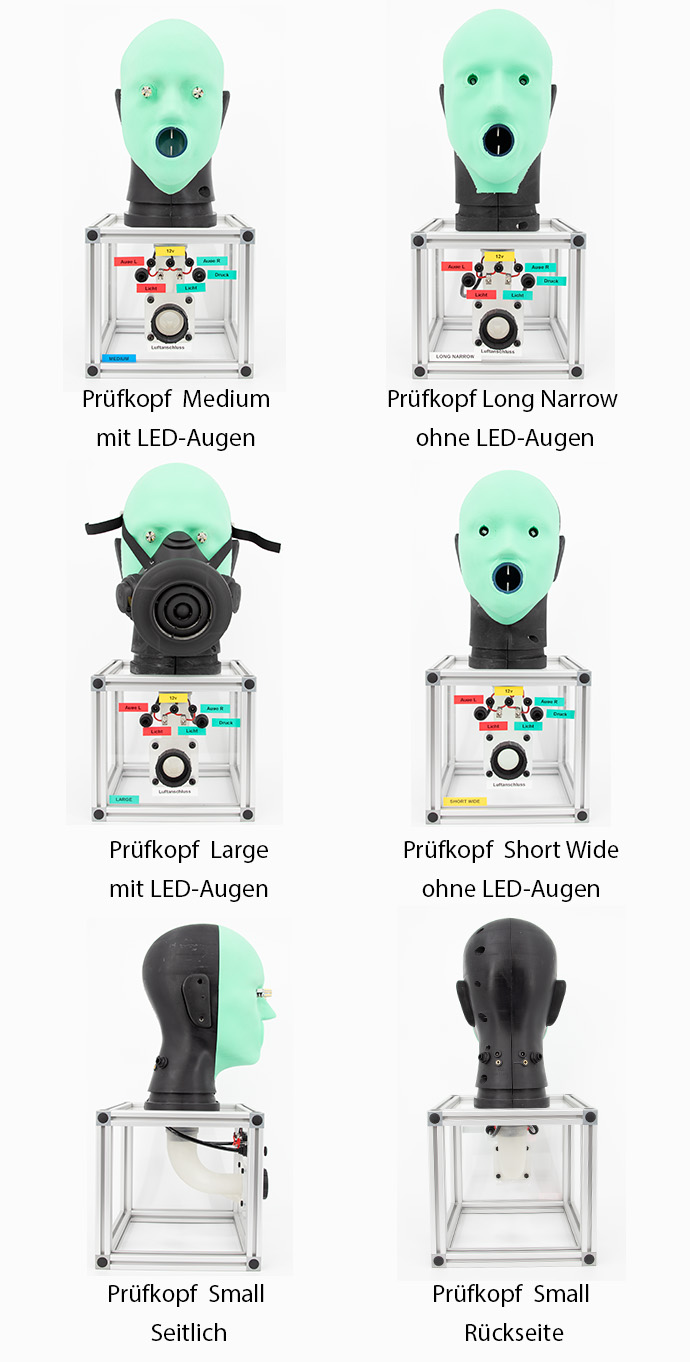
Technische Highlights
- 5 Größen: S, SW, M, LN, L
- EN-148-1 Rundgewindeanschluss
- Messpunkte für CO₂- und Druckmessung im Mund-/Luftröhrenbereich
- Druckmessung an beiden Augen
- Wechselbare LED-Augen separat ansteuerbar
- Elastomerhaut in verschiedenen Härtegraden verfügbar
- auswechselbare Ohren mit Option auf integrierte Hörgeräte
- Abdichtoption am Hals für die Prüfung von Hauben
- Kompatibilität mit Prüftorsos nach ISO 16900-5
Anwendungsbereiche
- Prüflabore & Zertifizierungsinstitute
- Forschung & Entwicklung
- Produktion & Qualitätskontrolle
- Wartung & Service
Normen & Richtlinien
- ISO 16900-5 – Prüfköpfe
- ISO 16900-11 – Sichtfeldprüfung
- ISO 16900-14 – Geräuschemission / Hörtests
- Weitere Normprüfungen: ISO 16900-2, -8, -9 sowie EN 13274-1 und EN 136
Funktionen & Anwendungen im Detail
Sichtfeldtest (ISO 16900-11)
Dank den integrierten LED-Augen lassen sich Sichtfeldprüfungen nach ISO 16900-11 präzise durchführen. Die LEDs sind dabei einzeln ansteuerbar, wodurch sich verschiedene Blickwinkel simulieren lassen. Bei der Testung wird der sogenannte Visual Field Score (VFS) ermittelt, also das effektive Sichtfeld, das eine Atemschutzmaske oder Haube bietet.
Hörtest / Geräuschemission (ISO 16900-14)
Die Prüfköpfe können optional mit austauschbaren Ohren inklusive integrierter Hörgeräte ausgestattet werden. Dadurch wird es möglich, die Geräuschemission von Atemschutzsystemen direkt am Prüfkopf präzise zu messen. Gleichzeitig kann überprüft werden, ob akustische Warnsignale zuverlässig wahrgenommen werden – ein entscheidender Aspekt für die Sicherheit im praktischen Einsatz.
Leckagetest (ISO 16900-1 / EN 13274-1)
Dank ihrer vollständig dichten Konstruktion eignen sich die Prüfköpfe auch für den Einsatz in Leckagekammern. Dabei werden sie auf einem Prüftorso montiert, der mithilfe eines Beatmungsgeräts die menschliche Atmung realistisch simuliert. Im Rahmen der Prüfung wird die nach innen gerichtete Leckage ermittelt – also die Menge an Umgebungsluft, die in das Atemschutzsystem eindringen kann. Diese Messung ist ein zentraler Faktor zur Bestimmung der Schutzklasse von Masken und Hauben.
Dichtigkeitstest (EN 136)
Die Prüfköpfe lassen sich direkt an Maskenprüfgeräte anschließen und ermöglichen so die Dichtigkeitsprüfung von Vollmasken nach EN 136. Dieses Verfahren stellt sicher, dass das Atemschutzsystem zuverlässig abschließt und keine Fremdluft durch Leckagen in die Maske eindringen kann.
CO₂-Test, Atemwiderstand & Volumenstrom
Die Prüfköpfe verfügen über präzise integrierte Messpunkte im Mund- und Luftröhrenbereich. Damit lassen sich mehrere sicherheitsrelevante Funktionsprüfungen durchführen:
• CO₂-Gehalt der eingeatmeten Luft (ISO 16900-9):
Bewertung der Luftqualität für den Anwender.
• Atemwiderstandsmessung (ISO 16900-2):
Ermittlung, in welchem Maße das Atemschutzsystem die Atmung beeinflusst.
• Volumenstrommessung (ISO 16900-8):
Kontrolle der Luftleistung und Effizienz des Atemschutzgeräts.